QR codes for business cards that outlive the job title
A business card is the smallest print run on this list and the one that lives longest in somebody else's wallet. A code on the back of it opens your site, your LinkedIn profile or a page about you: one scan and they are there, with nothing to type and nothing to search. The code is a URL and nothing else, never a contact file, and that is what keeps it valid: you change the page, and the cards you have already handed out stay right.
The setup, end to end
- Point the code at a page you control: your site, your LinkedIn profile, or a contact page you can edit. Nothing about you is baked into the pixels.
- Put it on the back, where it is not competing with your name, and print one proof before the box of five hundred.
- When the title, the number or the company changes, change the page or repoint the code. Every card already in a wallet follows.
What the tagged link looks like
https://example.com/about?utm_source=business-card&utm_medium=qr&utm_campaign=networkingAppended when the code is scanned rather than printed into the image, so the tags stay editable after the artwork is on paper. GA4 has no default channel rule for "qr", so these scans report as Unassigned. Add a custom channel group matching medium = qr to give it a name in your reports.
Show me how5 steps
Step 1 of 5
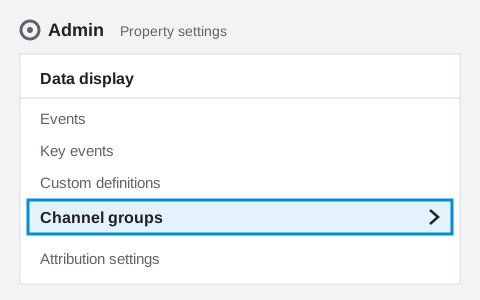
Open Channel groups
In GA4, click “Admin” (the gear, bottom left). Under “Data display”, open “Channel groups”. You need the Editor role or above.
Step 2 of 5
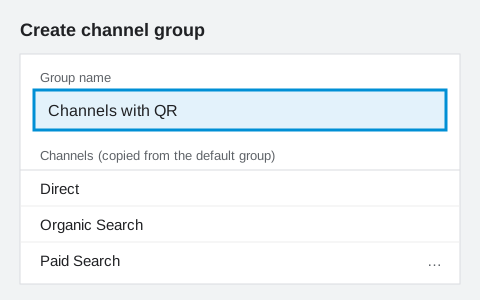
Create a group
Click “Create new channel group” and name it, for example “Channels with QR”. Your first custom group starts as a copy of GA4's default group. A standard property holds two custom groups, so if you already have two, add the channel to one of them instead.
Step 3 of 5
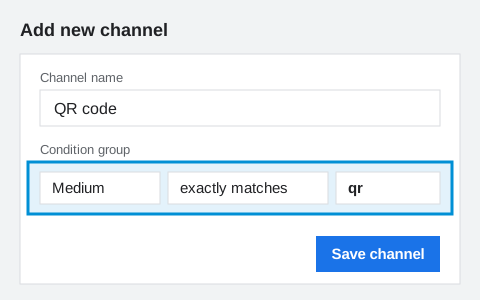
Add a QR channel
Click “Add new channel” and name it “QR code”. Click “Add condition group”, choose “Medium” and “exactly matches”, type qr, then click “Save channel”.
Step 4 of 5
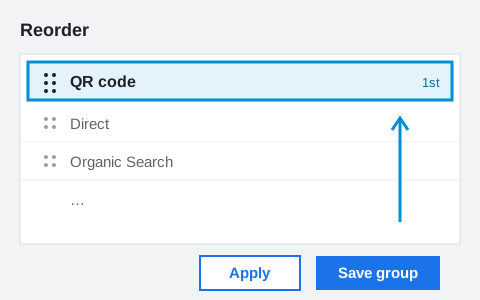
Move it to the top, then save
A new channel lands at the bottom, and GA4 files a session under the first channel that matches. Click “Reorder”, drag “QR code” to the top, click “Apply”, then “Save group”.
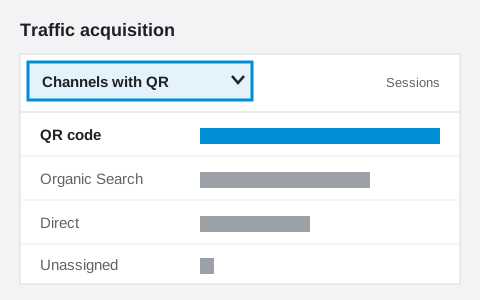
Step 5 of 5
Read it in your reports
Open “Reports”, then “Acquisition”, then “Traffic acquisition”. In the table's dimension menu, pick your group. GA4 may list it as “Session custom channel group” rather than by its name. The group applies to past data too.
What goes wrong here
The card outlives the job title. A vCard code carries the name, the number and the company in its pixels: the day one of them changes, every card in every wallet is wrong and nothing can correct it. A code that opens a page is corrected once, on the page, and the scans tell you how many of the cards you handed out were ever used.
What it costs
- Live codes
- 3 free, unlimited on Pro
- Scans
- Never capped, any plan
- History
- 7 days free
- Expiry
- None, including after you stop paying
On a business card
Read from arm's length by somebody who has just been handed it, so small is fine: a code the size of a postage stamp scans, provided the quiet zone around it is clear and it is not printed across a fold or a foil finish. Matt stock helps; a glossy card reflects the light of the phone that is trying to read it.
A common starting point is a code about a tenth as wide as the distance it will be read from. Print one at that size, scan it with the oldest phone you can find, and adjust. No table can answer this for your paper and your lighting.
Show me how to size it5 steps
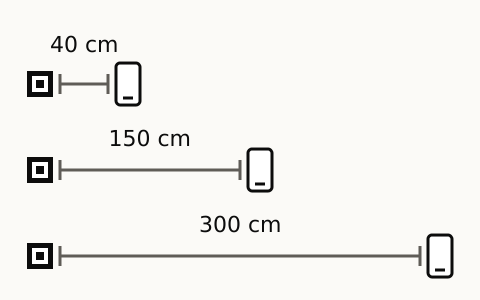
Step 1 of 5
Find the scanning distance
Stand where somebody will stand to scan it, and measure to where the code will be. A table tent or a business card is read from arm's length, a window poster from the pavement, a car from the pavement or the car behind.
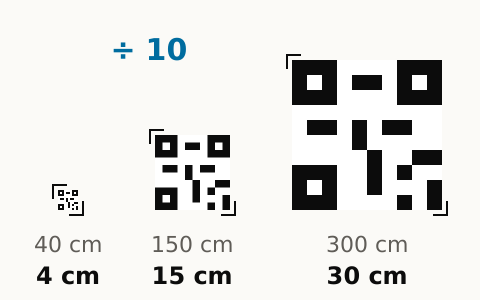
Step 2 of 5
Make it about a tenth of that distance
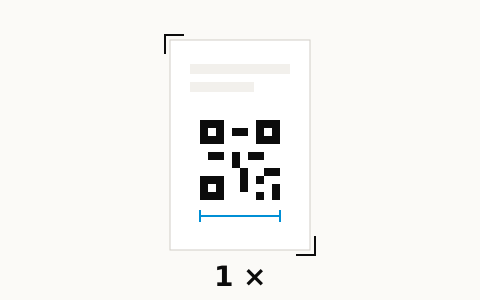
A common starting point is a code about a tenth as wide as the distance it is read from. From forty centimetres that is about four, from three metres about thirty. Keep a clear white margin around it.
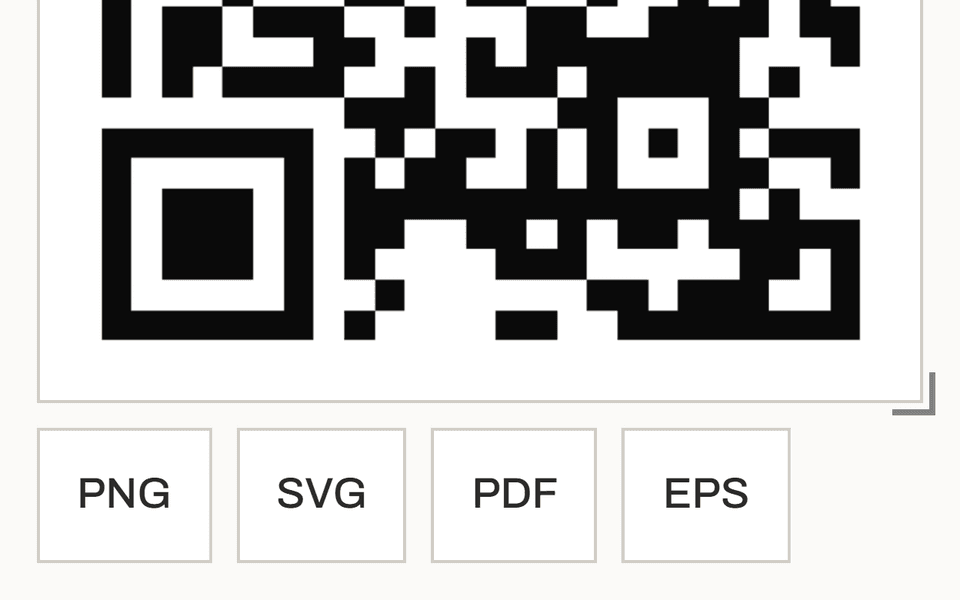
Step 3 of 5
Download the file that fits the size
For a flyer, a card or a table tent, the PNG is enough. For a poster or a car, take the SVG or the PDF, which stay sharp at any size. On a Free account the code's page offers the PNG; SVG, PDF and EPS come with Pro.
Step 4 of 5
Print one proof
Print a single copy at that size, on the paper or vinyl the run will use. Matt stock scans better than gloss, and a fold or a foil finish across the code can stop it scanning.
Step 5 of 5
Scan it from the real distance, then print the run
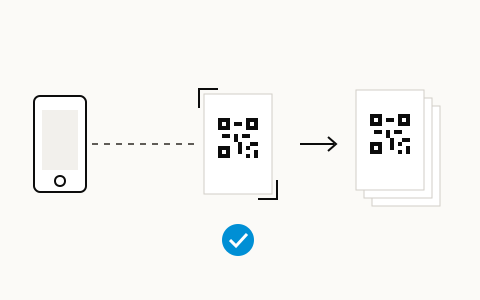
Stand at the distance from step 1 and scan the proof with the oldest phone you can find, in the light it will hang in. If it hesitates, make the code larger and print another proof. When it scans at once, print the run.
What this is not
A vCard. A contact-file code saves the name and number into the phone in one tap, offline, and this one does not: the scan opens a page, which needs a connection, and the person copies what they want from it. That is the price of a card that can be corrected after it is printed, and of knowing how many of the cards you handed out were ever scanned. If your details will never change and one-tap saving is the whole point, a vCard code is the right choice, and this page says so rather than sell you a URL for a thing it does not do.
No card. Nothing you print here stops working.